Forecasting
How is forward-looking cash-flow forecasting different from credit scoring?
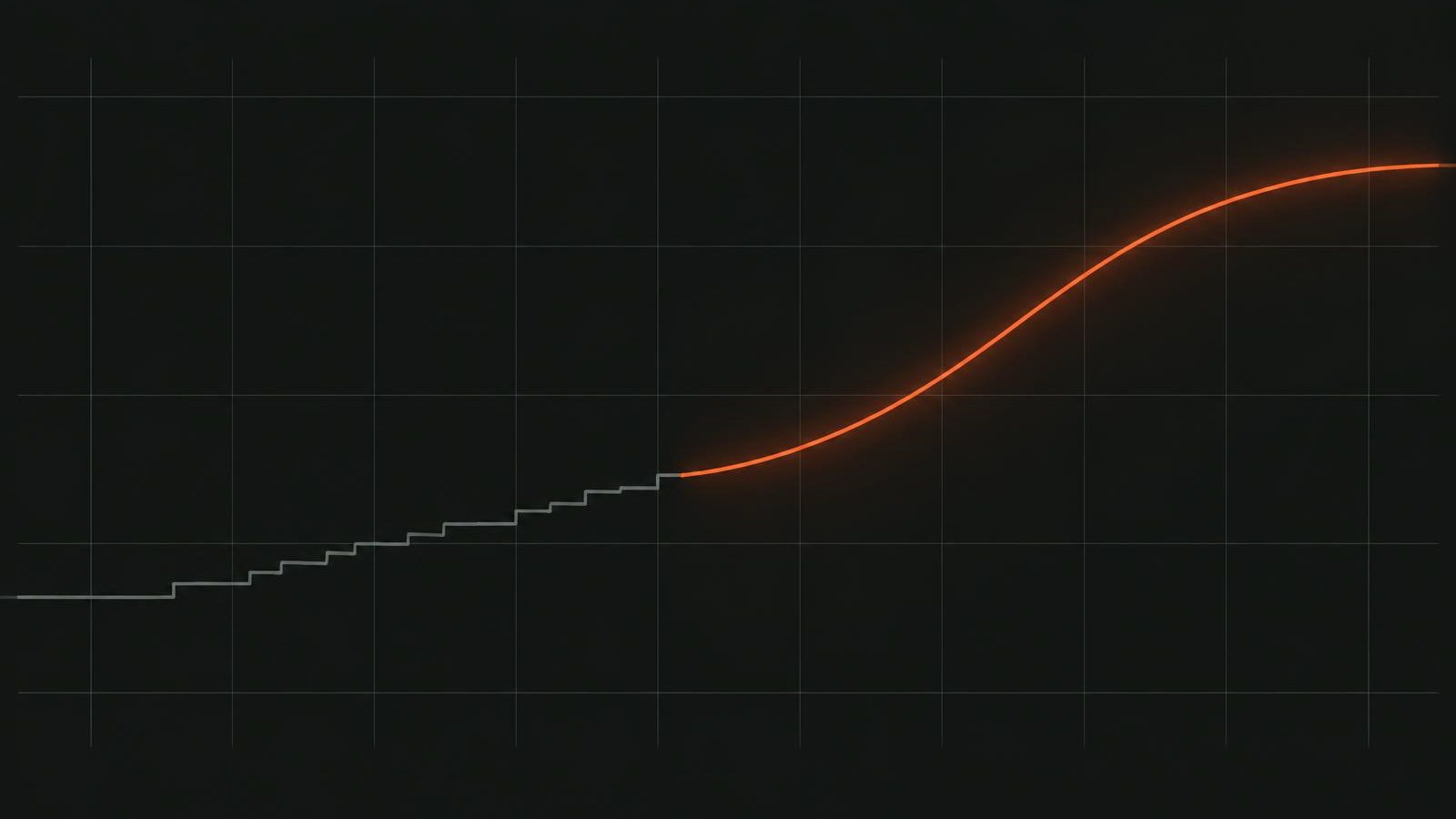
Credit scoring and forward-looking cash-flow forecasting answer different questions. A credit score asks: based on how this person has handled borrowed money in the past, how likely are they to repay? A cash-flow forecast asks: based on when this household's money arrives and when it must leave, what do the next several weeks look like? One is a backward-looking summary of credit behaviour. The other is a forward-looking projection of liquidity timing.
Neither replaces the other. They operate on different data, over different horizons, and they fail in different ways — which is exactly why institutions increasingly treat them as complements.
Different data
A credit score is built from credit-file data: accounts opened, balances owed, payment history on credit products, utilization, and similar records reported to bureaus. It says little about money that never touches a credit product — rent paid by transfer, income from multiple employers, cash expenses, or obligations like utilities and subscriptions.
A cash-flow forecast is built from transaction-level data: income deposits and their cadence, recurring obligations and their dates, and balance behaviour over time. It can see pressure forming in parts of household finance that a credit file never records — and it can miss things a credit file captures well, such as total indebtedness across institutions.
Different horizons
Credit scores are deliberately stable. They move slowly, summarizing years of behaviour into a number designed for decisions with long consequences — a mortgage, a credit line, a multi-year loan.
A cash-flow forecast is deliberately short-horizon. It projects days and weeks: the next paycheque, the next cluster of obligations, the next pressure window. It is meant to change as the calendar changes, and its value decays quickly — last month's forecast is history, not insight.
Different failure modes
A strong credit score can coexist with an imminent cash-flow problem. A customer with a decade of perfect payments can still face a week where rent, a vehicle payment, and an annual premium land before payday. The score is not wrong; it is answering a question that does not include next Tuesday.
Conversely, a household with a thin or bruised credit file may have perfectly stable cash flow — regular income, obligations comfortably inside it, no near-term pressure. A forecast can show that stability where a score shows only absence of history. This is one reason forward cash-flow views are of interest for customers with irregular income or limited credit files: the forecast evaluates the money itself, not the borrower's paper trail.
What each is for
- Credit scoring supports underwriting and pricing decisions: should this credit be extended, on what terms?
- Cash-flow forecasting supports timing and support decisions: when will this customer be under pressure, and what conversation or adjustment would help before then?
An institution deciding whether to approve a loan needs the first. An institution deciding when to reach out, whether a payment date should move, or how a customer's next month actually looks needs the second. Using a score for the second job is how customers who are "fine on paper" end up surprising everyone — including themselves.
How PFSI relates to credit scoring
PFSI is designed as a forward-looking layer, not a score. Its outputs are timelines, pressure windows, and explanations with stated assumptions — information meant to sit alongside an institution's existing credit and risk tooling, not to substitute for it. PFSI does not provide lending decisions or credit approval, and its forecasts are planning information rather than guarantees.
Key takeaways
- Credit scoring summarizes past repayment behaviour; cash-flow forecasting projects future money movement.
- They use different data: credit files versus transaction-level income and obligations.
- Scores are slow-moving and long-horizon; forecasts are short-horizon and calendar-specific.
- Institutions use scores to decide about credit, and forecasts to decide about timing and support.
Institutions evaluating forward-looking forecasting alongside their existing risk tools can begin a design-partner conversation through the [Partnerships page](/partnerships).
---
About PFSI: PFSI (Personal Financial Stability Intelligence) is the financial intelligence program in development at Monimate Technologies Inc. New to PFSI? Start with [What Is PFSI?](/blog/what-is-pfsi).