Forecasting
How should forecasts show their confidence and assumptions?
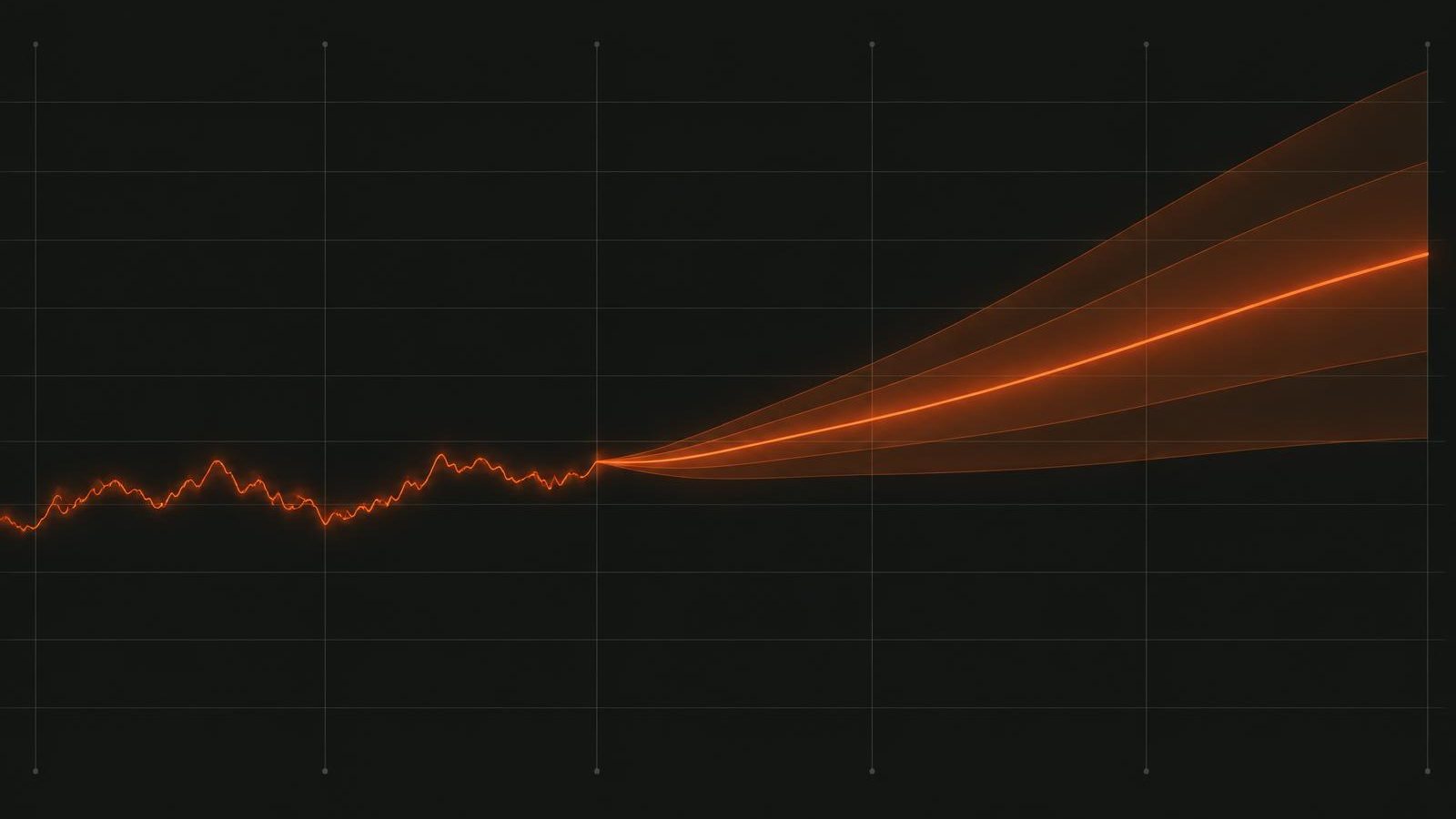
A forecast should show its confidence and assumptions in the same place it shows its conclusions — not in a methodology document nobody opens at the moment of decision. Concretely, every forward projection should travel with: the income it assumed (sources, amounts, dates), the obligations it included, the freshness and scope of the data underneath it, and an honest indication of where it is most likely to be wrong. A number without those companions asks for more trust than it has earned.
This is not a presentational nicety. In institutional use, the assumption layer is the difference between a forecast that can be acted on and one that can only be admired.
The four things to surface
1. Income assumptions. Expected income drives everything downstream. The output should state which income sources were identified, the amounts and dates assumed, and how variable each source has historically been. A forecast built on a fixed salary and one built on fluctuating platform earnings should not look equally certain, even if their projected balances are identical.
2. Obligation coverage. Which recurring obligations were included in the projection — and, implicitly, the boundary of what was seen. If the data covers one account, the assumptions should say one account. A projection that silently omits a household's largest obligation is worse than no projection, because it manufactures confidence.
3. Data freshness and scope. When were balances and transactions last updated, and over what history was the pattern learned? A forecast from data synced this morning and one from data three weeks old are different instruments. Staleness should be visible at a glance, not discoverable in a log.
4. Known fragility. Where is this specific projection most likely to break? An expected income payment from an employer who has paid late twice in six months; an obligation whose amount changed at its last occurrence; a seasonal pattern entering its historically weak period. Naming the fragile points turns the forecast from a verdict into a briefing.
Confidence is not a single number
It is tempting to compress all of this into one confidence score. Resist it. A single number hides exactly the information a reviewer needs: which assumption is shaky matters more than how shaky the whole thing is on average. A forecast can be highly confident about obligations and genuinely uncertain about income — the right response differs (trust the window's shape, distrust its depth), and only decomposed confidence supports that judgement.
Where summary indicators are used, they should summarize the visible detail, never replace it.
Assumptions are also a customer feature
Everything above is usually framed as an internal risk control. It is equally a customer-trust feature. A household shown a pressure window alongside its assumptions — "this assumes your usual pay arrives on the 15th; it doesn't include cash income" — can correct the record, understand the limits, and calibrate their own trust. A household shown an unexplained warning learns only that the institution is watching and cannot say why. The first experience builds the relationship early-warning systems depend on. The second corrodes it.
PFSI's position
PFSI is designed so that explanations and assumptions are first-class outputs, returned with the forecast rather than reconstructed after the fact: the reasoning fields, the data scope, and the illustrative labelling of example content are part of the data model. On the Financial Intelligence page of this site, the worked examples are labelled as illustrative scenarios using fictional financial information — the same discipline the production outputs are designed to carry.
Key takeaways
- Confidence and assumptions belong in the output, beside the conclusion, at the moment of decision.
- Surface four things: income assumptions, obligation coverage, data freshness/scope, and known fragility points.
- Confidence should be decomposed by assumption, not compressed into a single score.
- Visible assumptions are a customer-trust feature as much as a risk control.
Institutions that evaluate forecasts by their assumption discipline can apply that standard to PFSI through a design-partner conversation on the [Partnerships page](/partnerships).
---
About PFSI: PFSI (Personal Financial Stability Intelligence) is the financial intelligence program in development at Monimate Technologies Inc. New to PFSI? Start with [What Is PFSI?](/blog/what-is-pfsi).