Concepts
What does "Safe Until" mean in cash-flow forecasting?
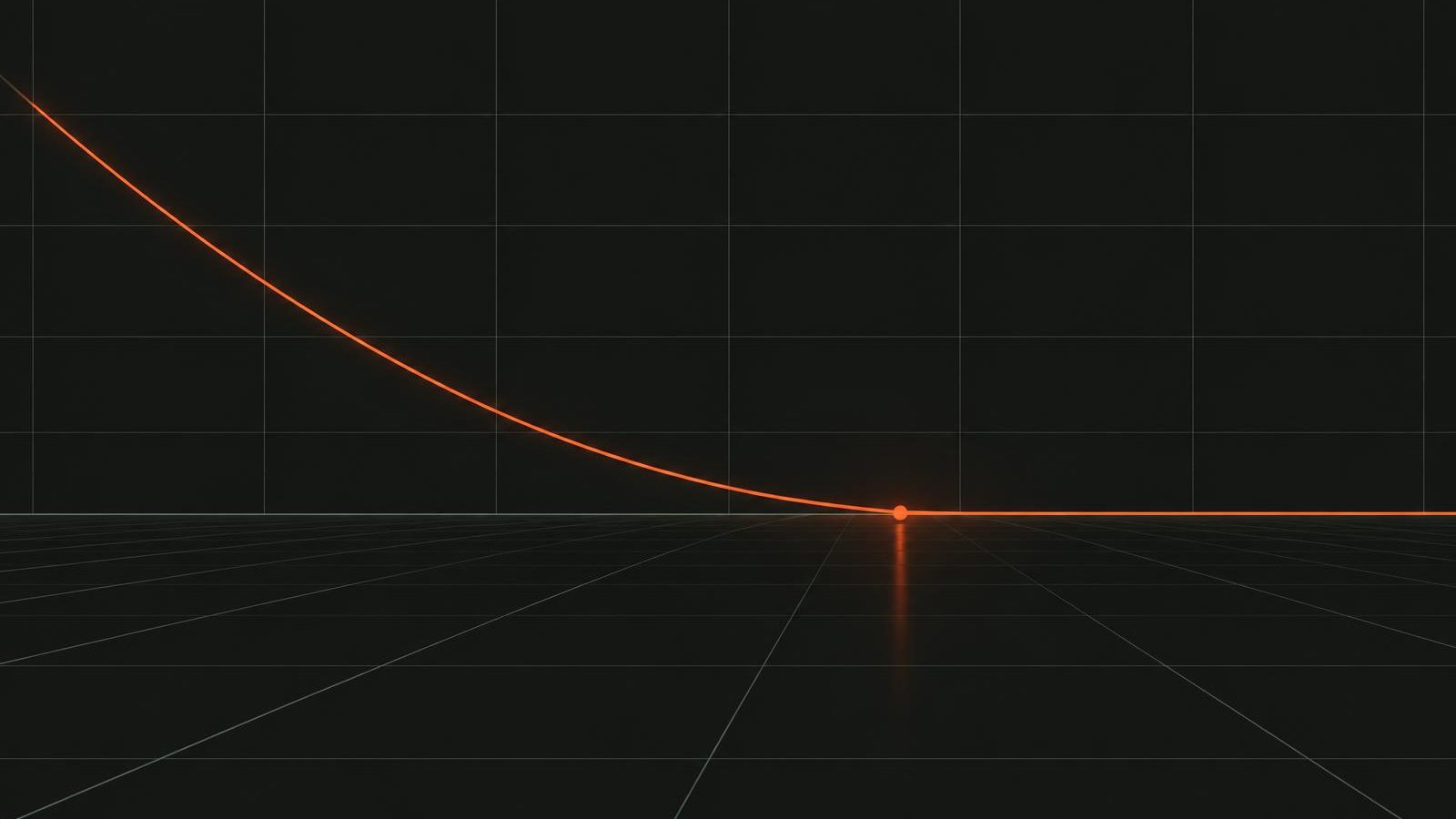
"Safe Until" is a measure that answers a simple question: given the income and obligations we can see, until what date is this household's projected cash expected to cover its scheduled commitments? Rather than reporting a balance at a moment in time, it reports a horizon — the date up to which the forecast shows commitments covered, after which projected cash runs short against what is due.
It is, in effect, a translation of a forecast into the unit people actually plan in: time.
Why a date communicates more than a balance
A balance is ambiguous. "$800 in the account" can mean comfortable or critical depending entirely on what is due before the next income arrives. $800 with no obligations for twelve days is fine. $800 with rent due in three days is not. The number alone cannot tell you which situation you are in.
A Safe Until date resolves the ambiguity by construction. It already accounts for the obligations in between. "Covered until the 24th" carries its context inside it: everything scheduled before that date is spoken for, and the 24th is where attention should go. For institution staff reviewing many customers, and for customers reviewing their own month, a date is faster to understand and harder to misread than a balance.
How it is calculated
Conceptually, the calculation is a walk forward through the forecast:
- Start from the current available balance.
- Move day by day through the projection, adding expected income on its expected dates and subtracting scheduled obligations on theirs.
- The Safe Until date is the point where projected available cash first falls short of the commitments still ahead — or the end of the forecast horizon if it never does.
Two households with identical balances can have very different Safe Until dates, because the measure is driven by the pattern of obligations, not just their total. That is the point: it prices timing into a single, legible figure.
What Safe Until is not
Safe Until is a projection, not a promise. It inherits every assumption in the underlying forecast:
- It assumes expected income arrives on its expected date and in its expected amount.
- It only covers obligations the data can see; unrecorded commitments shorten the real horizon.
- It does not account for discretionary spending decisions made along the way.
For that reason, Safe Until should always be presented with its assumptions and confidence visible — what income was assumed, which obligations were included, and how current the data is. A Safe Until date presented as a guarantee would be a misuse of the concept. Presented honestly, it is one of the clearest summaries a forecast can offer.
How institutions can use it
A coverage horizon supports practical workflows. Portfolios can be reviewed by horizon rather than by balance: whose coverage ends soonest, and why. Outreach can be timed to the horizon — a conversation is most useful while there is still covered time left to plan in. And changes can be evaluated against it: if a payment date moves or an obligation is rescheduled, does the horizon extend? By how much? Safe Until turns those questions into comparisons of dates, which are easy to reason about and easy to explain to a customer.
PFSI is designed to include coverage-horizon measures like Safe Until in its forward view, always paired with the forecast's stated assumptions.
Key takeaways
- Safe Until expresses how far forward projected cash covers scheduled commitments — a date, not a balance.
- It is calculated by walking the forecast forward day by day against expected income and obligations.
- Identical balances can hide very different horizons; the measure prices timing in.
- It is a planning figure that must travel with its assumptions, never a guarantee.
Institutions interested in coverage-horizon measures for their customers can explore a design-partner conversation through the [Partnerships page](/partnerships).
---
About PFSI: PFSI (Personal Financial Stability Intelligence) is the financial intelligence program in development at Monimate Technologies Inc. New to PFSI? Start with [What Is PFSI?](/blog/what-is-pfsi).